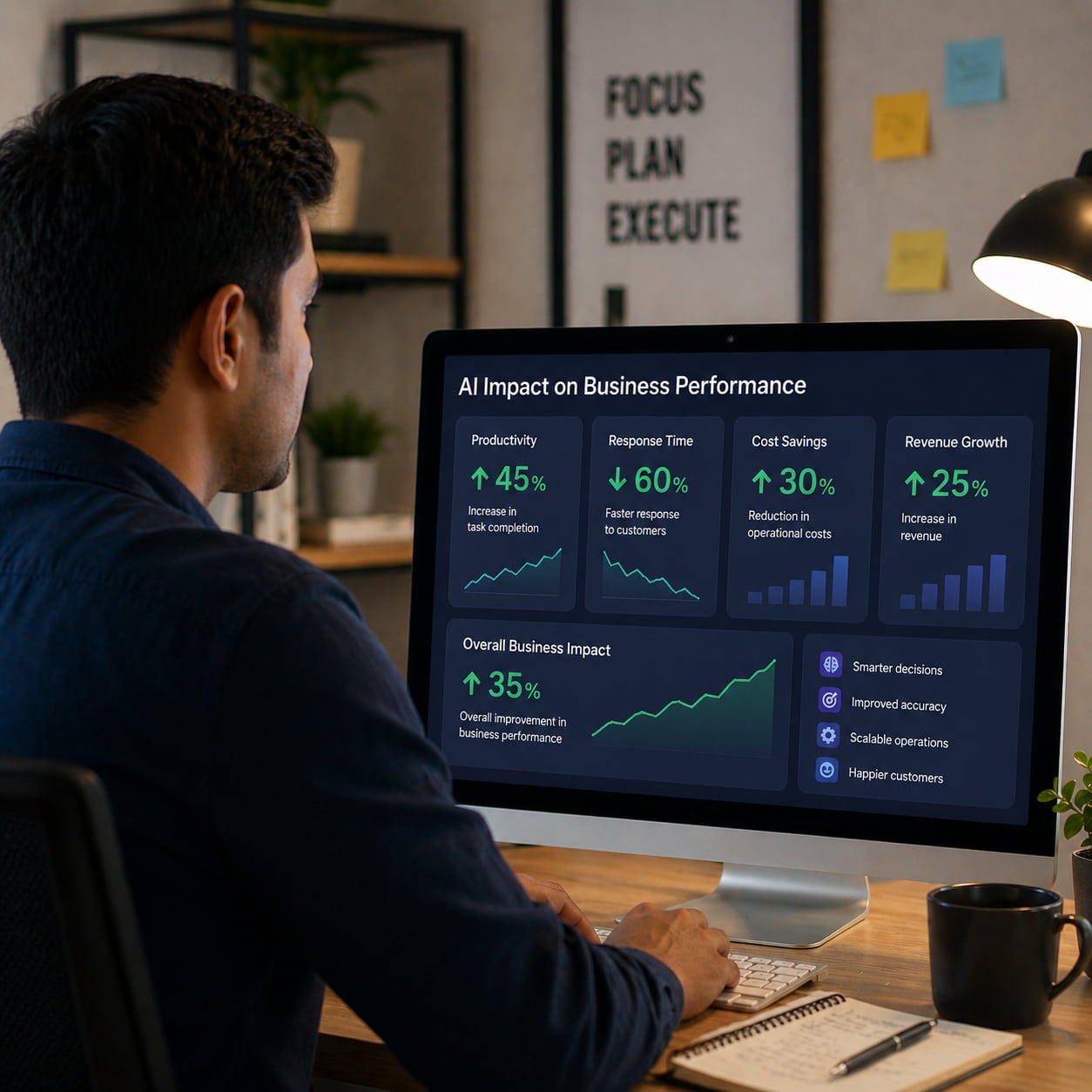
AI-Driven Automation Aligned with Business Workflows

Effective automation is not about replacing tasks. It is about improving how decisions and actions happen across systems and teams.

At Cloud Certitude, we design intelligent automation solutions around real workflows across sales, service, operations, and reporting environments.

Before implementation, we focus on:

  • Process clarity and workflow mapping
  • Data consistency across systems
  • Points where automation creates measurable impact

This ensures automation is reliable, scalable, and actively used across teams.

Illustration
Illustration

Intelligent Automation for Process Efficiency & Scale

To deliver consistent results, automation needs to go beyond rule-based execution.

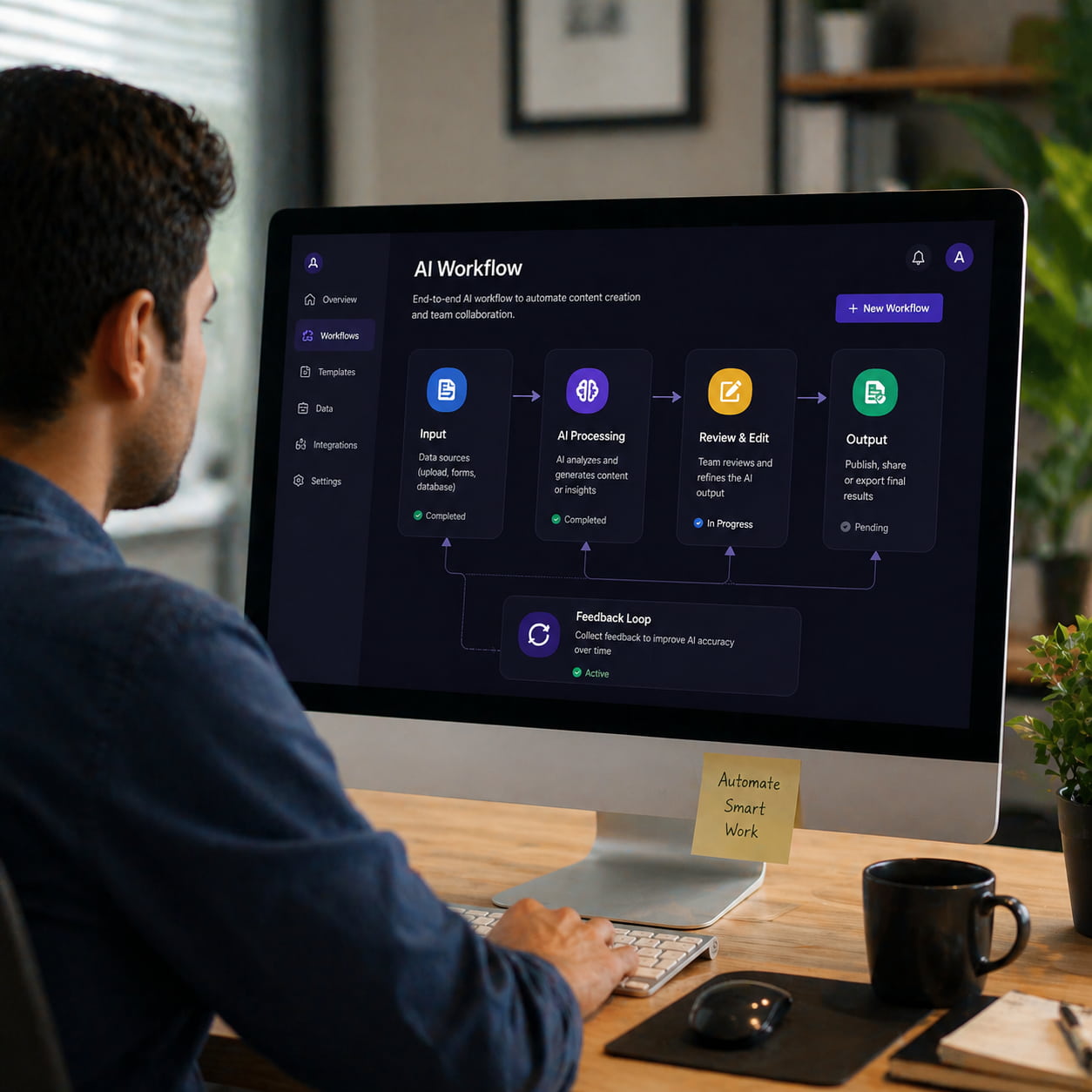
A structured intelligent automation strategy ensures workflows adapt based on real-time data, business logic, and system interactions.

This enables organizations to scale operations without increasing manual effort or operational complexity.

Intelligent automation services also ensure consistent execution across systems by reducing dependency on manual inputs and fragmented processes. When automation is integrated with real-time data and AI, workflows become more responsive, adaptive, and reliable across business functions.

Automation not delivering expected results?
Align it with real workflows →

Intelligent Automation in Salesforce (Agentforce, Flows, Einstein AI)

Automation becomes significantly more effective when integrated within Salesforce and connected systems businesses can:

  • Automatically update opportunity stages based on activity signals
  • Trigger workflows across sales, service, and operations
  • Route leads and cases intelligently without manual intervention
  • Align forecasting with real-time pipeline movement

This shifts automation from rule-based execution to intelligent, data-driven decision systems.
Illustration
Illustration

AI Automation & Workflow Optimization Services

  • Process Automation: Automate repetitive workflows across departments including operations, approvals, reporting, and task management.
  • AI-Driven Decision Automation: Enable systems to make decisions based on real-time data instead of fixed rules.
  • Intelligent Document Processing: Use OCR and NLP to extract, validate, and process data from invoices, contracts, and forms.
  • Workflow Redesign & Optimization: Identify inefficiencies and redesign processes for scalability, speed, and consistency.
  • End-to-End Automation Across Systems: Integrate automation across CRM, ERP, and internal tools to eliminate silos and manual dependencies.

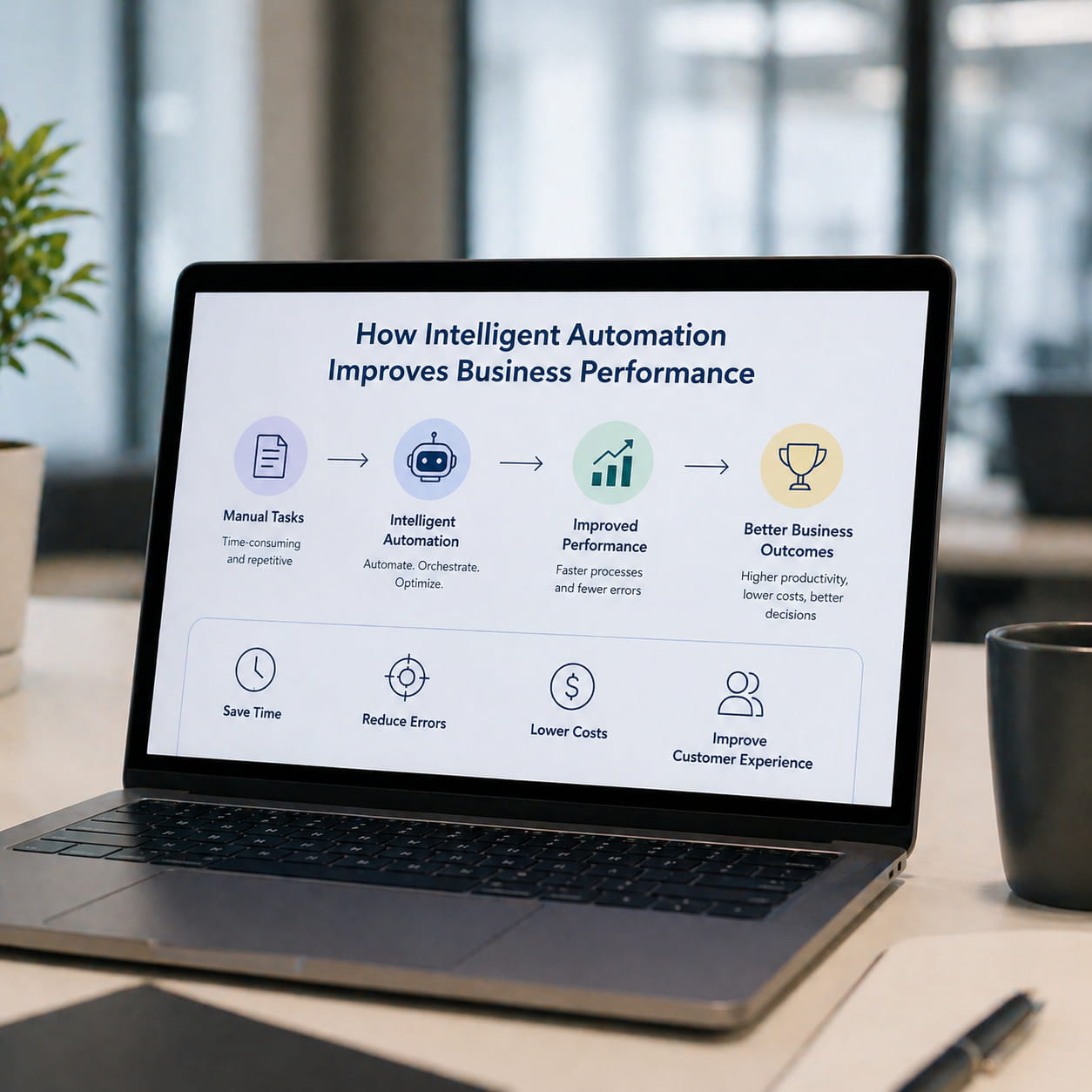
How Intelligent Automation Improves Business Performance

When implemented with the right structure, intelligent automation improves:

  • Faster execution of high-volume processes
  • Reduced manual errors and operational delays
  • Improved data consistency across systems
  • Higher productivity with reduced manual effort
  • Better decision making using real-time data triggers

The impact depends on how well automation is integrated into workflows, not just the tools being used.
Illustration

Frequently Asked Questions

Intelligent automation combines AI and workflow automation to execute tasks, make decisions, and improve business processes with minimal manual intervention.

Traditional automation follows fixed rules. Intelligent automation uses AI to adapt, analyze data, and make decisions dynamically.

Yes. Salesforce supports intelligent automation using Flow, Agentforce, Einstein AI, and integrations with other systems.

Basic workflows can be automated within 2 to 6 weeks. Complex multi-system automation may take longer depending on scope.

Start with repetitive, high-volume tasks such as lead routing, approvals, reporting, and customer communication.